Accurate measurements are essential for land surveying, construction, road development, infrastructure projects, and civil engineering. A total station is a precision surveying instrument used to measure horizontal angles, vertical angles, and distances. However, regular use, transportation, environmental conditions, and accidental impacts can affect its measurement accuracy. This is why total station calibration services in India are important for maintaining reliable survey results.
Professional calibration helps identify measurement errors, verify instrument performance, and determine whether a total station meets the required accuracy specifications. SuperTech Survey & Services Pvt. Ltd., established in 2014 in Noida, provides surveying equipment solutions and technical support to customers across India.
This guide explains the total station calibration process, its benefits, estimated costs, and the factors to consider when choosing a calibration service provider.
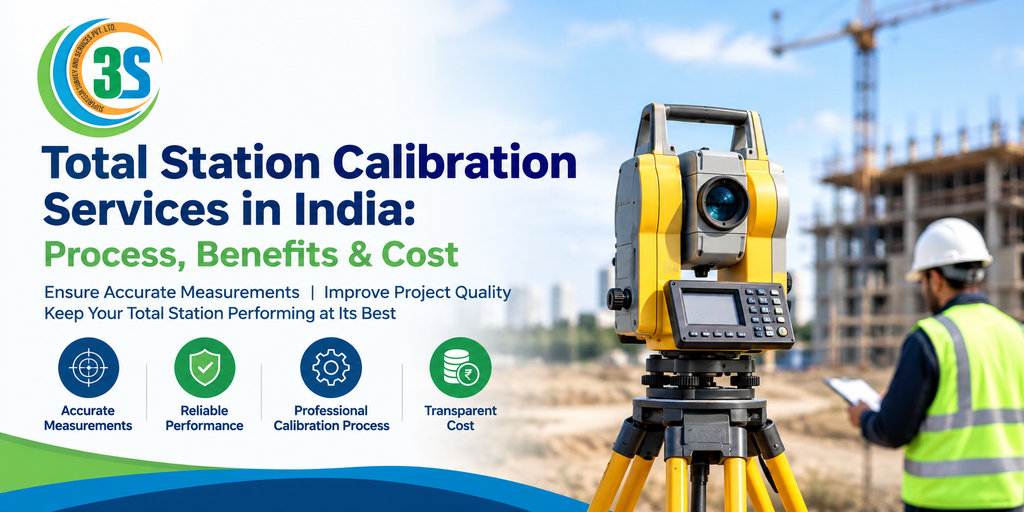
What Are Total Station Calibration Services?
Total station calibration is the process of checking an instrument’s measurements against appropriate reference standards to identify errors and evaluate its performance. Depending on the instrument and service scope, calibration may include checking angle measurements, distance measurements, compensator performance, and other essential functions.
Calibration is different from repair. Calibration identifies and documents measurement deviations, while repair involves correcting faults or replacing damaged components. An instrument may require adjustment or repair if its errors exceed acceptable limits.
Quick answer: Total station calibration services help surveyors verify measurement accuracy, identify instrument errors, and maintain confidence in field measurements. The required checks depend on the instrument model, manufacturer specifications, and intended application.
Why Is Total Station Calibration Important?
Regular calibration supports reliable surveying and helps reduce costly measurement errors. Its main benefits include:
- Improved measurement reliability: Helps identify errors affecting angle and distance measurements.
- Better construction accuracy: Supports accurate setting out for buildings, roads, bridges, and infrastructure.
- Reduced rework: Helps minimize errors that could lead to repeated surveys and costly corrections.
- Quality assurance: Provides documented evidence of instrument performance when a suitable calibration certificate is issued.
- Early fault detection: Can reveal problems involving the optical system, compensator, EDM, or alignment.
- Equipment maintenance: Helps identify when further inspection, adjustment, or repair is necessary.
Calibration alone cannot guarantee error-free results. Correct field procedures, suitable environmental conditions, stable instrument setup, and trained operators remain essential.
Total Station Calibration Process: Step by Step
The calibration procedure varies by manufacturer and model. A professional service generally includes the following stages.
1. Initial Inspection
The technician examines the instrument’s physical condition, tribrach, leveling screws, optical components, display, battery, and other accessible parts. Signs of impact damage, moisture, loose components, or unusual operation may require further investigation.
2. Instrument Setup and Leveling
The total station is mounted on a stable tripod or suitable calibration fixture. The technician checks leveling and compensator operation to ensure that the instrument is correctly positioned before measurements are tested.
3. Angle Measurement Checks
Horizontal and vertical angle measurements are checked using appropriate procedures and reference equipment. Tests may help identify collimation errors, vertical index errors, or other angular deviations.
4. Electronic Distance Measurement (EDM) Testing
The EDM system is evaluated against suitable distance references or a calibrated baseline, depending on the service facility and instrument specifications. These checks help assess whether distance readings fall within the expected tolerance.
5. Compensator and Alignment Checks
The technician evaluates the compensator and other relevant functions, following the manufacturer’s procedures. Additional checks may be required for instruments with special features or particular accuracy requirements.
6. Adjustment or Repair, If Required
If the test results indicate excessive errors, the instrument may require adjustment or repair. Any corrective work should follow the manufacturer’s instructions and be performed by appropriately qualified personnel.
7. Final Verification and Documentation
After testing and any necessary adjustments, the instrument is checked again. Where the service includes formal calibration documentation, the report or certificate should identify the instrument, test results, applicable tolerances, and relevant reference standards.
Customers should confirm in advance whether the quoted service includes adjustment, repair, repeat testing, and a calibration certificate.
How Much Does Total Station Calibration Cost in India?
The cost of total station calibration in India depends on the instrument’s condition, model, accuracy class, service requirements, and the facilities used for testing.
Indicative budgeting ranges may vary considerably:
| Service type | Estimated cost |
| Basic inspection and performance checks | ₹1,000–₹3,000 |
| Standard calibration and verification | ₹2,000–₹6,000 |
| Calibration with adjustment or additional testing | ₹4,000–₹10,000+ |
| Repair, replacement parts, or major servicing | Quoted separately |
These are illustrative budgeting estimates, not verified current market prices or a quotation from SuperTech Survey. Actual charges may be higher or lower. Confirm the scope and price directly with the service provider.
Factors Affecting Calibration Cost
- Brand and model: Different instruments may require different procedures and equipment.
- Instrument condition: Damaged or poorly maintained equipment may need additional work.
- Calibration scope: Basic verification may cost less than comprehensive testing and adjustment.
- Certificate requirements: Formal documentation and traceability requirements can affect pricing.
- Transportation: Pickup, delivery, shipping, and insurance may add to the total expense.
- Spare parts and repairs: Component replacement is generally charged separately from calibration.
For an accurate quotation, provide the instrument brand, model, serial number, known faults, and required documentation.
How Often Should a Total Station Be Calibrated?
There is no single calibration interval suitable for every total station. Follow the manufacturer’s recommendations and any project-specific quality requirements.
Calibration or a professional accuracy check may be appropriate when:
- The instrument has been dropped or subjected to impact.
- Measurements appear inconsistent or repeated observations disagree.
- The equipment has undergone repair or adjustment.
- The instrument is used frequently on demanding projects.
- A client, consultant, or project quality plan requires documented calibration.
Routine field checks should also be performed according to the manufacturer’s guidance. These checks help identify potential problems between formal calibration appointments.
How to Choose a Reliable Total Station Calibration Service Provider
Before selecting a service provider, consider the following points:
- Technical expertise: Check whether technicians are familiar with your instrument’s brand and model.
- Suitable testing facilities: Ask about the reference equipment and procedures used for calibration.
- Clear documentation: Confirm what the calibration report or certificate includes.
- Transparent pricing: Request a breakdown of calibration, adjustment, repair, parts, and transportation charges.
- Manufacturer recommendations: Verify that the procedures are appropriate for your instrument.
- Service support: Ask about turnaround time, warranty terms for repairs, and after-service assistance.
If your project requires accredited calibration, verify the provider’s current accreditation, its scope, and whether the specific instrument and tests are covered. Do not assume that every calibration certificate is an accredited certificate.
Total Station Calibration Services by SuperTech Survey
SuperTech Survey & Services Pvt. Ltd. was established in 2014 in Noida and serves customers across India with surveying instruments, geospatial equipment, technical support, and after-sales assistance.
For customers seeking total station calibration services, the company can be contacted to discuss instrument requirements, available service options, and the appropriate next steps. Before booking, confirm whether calibration, adjustment, repair, and formal certification are available for your particular model.
To help the service team assess your requirements, share the instrument brand and model, serial number, current condition, and the type of calibration documentation needed.
Frequently Asked Questions (FAQs)
1. What is the purpose of total station calibration?
Total station calibration checks measurement performance, identifies errors, and helps determine whether the instrument meets the required accuracy specifications.
2. How much does total station calibration cost in India?
Costs depend on the model, testing scope, instrument condition, and documentation requirements. Obtain a current quotation from the service provider before booking.
3. Is calibration the same as total station repair?
No. Calibration evaluates measurement performance, while repair corrects faults or damaged components. An instrument may need both services.
4. Can I use a total station without calibration?
You should follow the manufacturer’s maintenance recommendations and project quality requirements. If the instrument has been damaged or produces inconsistent measurements, arrange professional inspection before relying on it for critical work.
5. Does calibration improve total station accuracy?
Calibration identifies measurement deviations. Accuracy may be restored or improved through appropriate adjustment or repair when necessary, followed by verification.
6. Which company provides total station calibration services in India?
SuperTech Survey & Services Pvt. Ltd., based in Noida, provides surveying equipment solutions and technical support. Contact the company to confirm current calibration availability, service scope, and documentation for your specific instrument.
Conclusion
Total station calibration is an important part of surveying equipment maintenance and measurement quality assurance. It helps identify errors, supports reliable field measurements, and reduces the risk of avoidable project rework. The right service depends on the instrument model, condition, required accuracy, and documentation standards.
When comparing total station calibration services in India, prioritize technical competence, suitable testing procedures, transparent pricing, and clear documentation. Contact SuperTech Survey & Services Pvt. Ltd. to discuss your instrument requirements and confirm the available service options before booking.